
One-to-ones - Part 2
By Ben Petersen, 23 Jan 2023
This is our second post thinking about one-to-ones, what used to be called ‘Christian friendship.’ In our first post we saw the basic ingredients that go into a one-to-one. In this second one we’ll think about some of the practicalities.
We can start thinking practically by seeing what our options are when we’re thinking about meeting one-to-one either with a Christian or a non-Christian, what we’ve called a discipleship one-to-one, or an evangelistic one-to-one.
Discipleship one-to-ones
The two main things to consider when preparing to meet with a Christian one-to-one are: Christian maturity, and content. Let’s think about maturity first.
The Christian maturity of the people in a one-to-one is going to affect what your goals are. One possible maturity combination is young-mature. Here we’re talking about a pairing where one person is a relatively young Christian, and the other person is a little bit further along in their walk with Jesus. I hope it’s obvious why this is a good thing. The younger believer gets to ask all their million questions to this person, and gets a grounding in the truth and Christian living as they get started.
The thing to note here is that the more mature Christian is going to take more of a lead. Often people in this situation would pick a book of the New Testament like Colossians to read together.[1] If you’re a young Christian and feeling like this is what you need, please talk to an elder or your C3 leader for some help.
But you could have a one-to-one where both people have been Christians a good while, and the input is much more mutual. We’ll explore this a bit more below. Here, just note that this kind of pairing can be a great thing.
Thirdly, I want to mention a training one-to-one. Here the basics are the same: prayer, Bible, friendship, but part of the goal is the train one person up to be teaching the word themselves. So, there might be more of a focus on an area of doctrine, learning to write and lead a Bible study, or perhaps spending a bit more time wrestling with the passage and learning to read more carefully. The people involved are likely going to be someone who’s been a Christian a while, but hasn’t done any or much teaching with someone who’s got a bit more experience teaching.
Next we’ll think about the actually content you might look at.
Studying the Bible
What’s it going to look like to study the Bible when you meet up? The reality is, it’s really flexible. Your first option is simply to turn up and read! Not everyone’s going to feel comfortable with this. And maybe it helps if you already know the book you’re in a bit. But we trust that God speaks through his word! So, there’s no reason you couldn’t just open up the Bible and read together.
If you’ve got time, and you’re a bit more confident you might be able to do some personal preparation and write a short Bible study; just 3-7 questions that are going to get your noses in the passage and give you space to talk about it together.[2]
Or you could use a study guide. These can be really helpful. Someone else has done the hard work, and in theory has put together some questions that are going to help you wrestle with the passage. The only downside is that sometimes they can be quite long! So, you could use one by bringing a copy to your meeting, and just working through the questions, or it might be helpful to combine the guide and some personal preparation. The Good Book Company has lots of good resources.
Fourthly, we have The Swedish Method, which goes like this:[3] Read the passage aloud, then read back through it and look for three things. First, a lightbulb, signifying anything that shines out as you read the passage. Maybe the key detail, or main point, or just something that really strikes you. Second, a question you have. And third, an arrow, something from that passage that applies to your life. Each person writes down one or two under each of those headings, then you discuss what you’ve written down. And then you pray about it. It’s a simple, low effort way to get into the passage, and to get concrete things to pray for.
Christian book
Another option for your one-to-one could be to read a Christian book! Now, given everything we believe about the power of God’s word at Church by the Bay, it might seem odd to suggest reading a Christian book. Doesn’t that just take us away from the Bible? No! Reading a good Christian book is like coming to the Bible with an expert guide. The author has done the hard study to work out how God’s word speaks into whatever the book’s about. They can help you understand and obey Jesus’ word together.
Prayer
Lastly, you could have a one-to-one that’s mainly based around prayer. Your main reason for meeting up is praying for one another and the life of the church. That is a precious ministry. Maybe you struggle to pray. Why not seek out someone to pray with? Better to pray with others than not to pray at all! Or maybe you’re such a keen pray-er you’ve got so much prayer energy you just need to burn up. Why not make a point of meeting with someone to pray? Why not start that time by reading a passage from the Bible that will inform your prayers? That can be low key.
Evangelistic one-to-ones
In the first post we thought about how God uses his word to bring life and make people wise for salvation. The reason that’s good news is that it means anyone can open up God’s word, the Bible, and have everything they need to introduce someone to the Lord Jesus. The rest is up to the Holy Spirit. That’s what makes an Evangelistic one-to-one not only possible, but a really good idea.
Like we did above, here we’re going to lay out some options for what an Evangelistic one-to-one could look like.
First, like before, you can always just turn up and read the Bible. We don’t need to panic, or to scratch around thinking what to share with someone. You already have the Bible. This is a bit of a reminder to those of us who are confident: you can just open the Bible and show people Jesus. And it’s a reminder to those of us who find this really scary, too: you can just open the Bible and show people Jesus, it’s his word that gives life. I’d suggest starting with Mark’s gospel. It’s short and fast paced. And from the off you’re seeing what Jesus did and said.
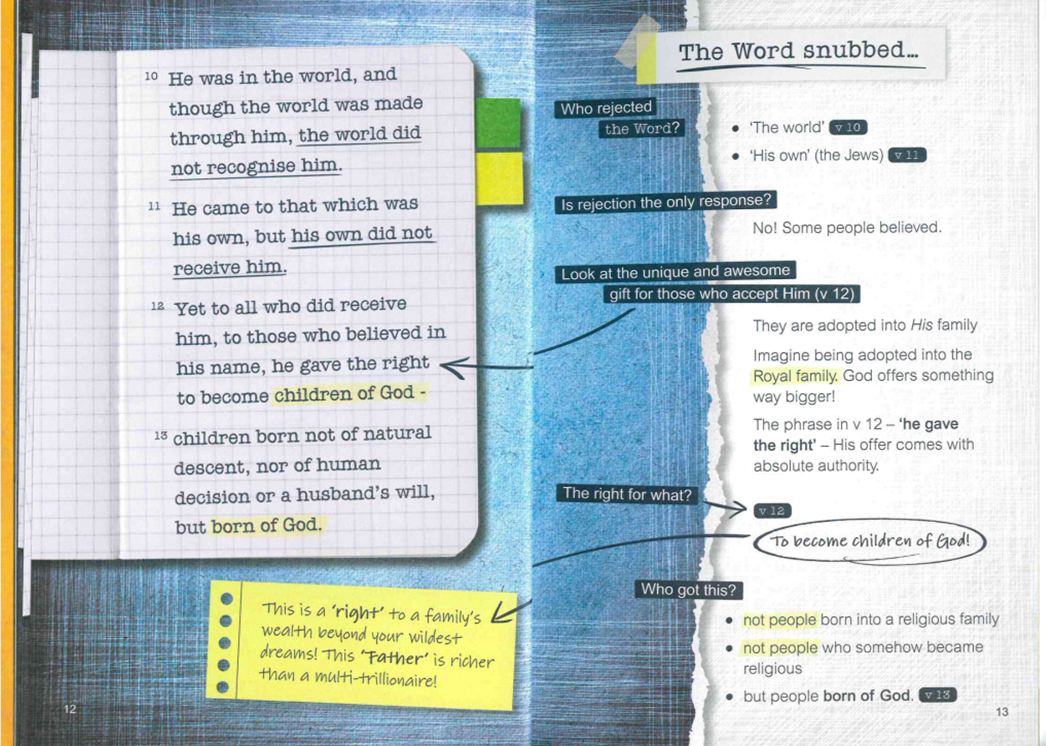
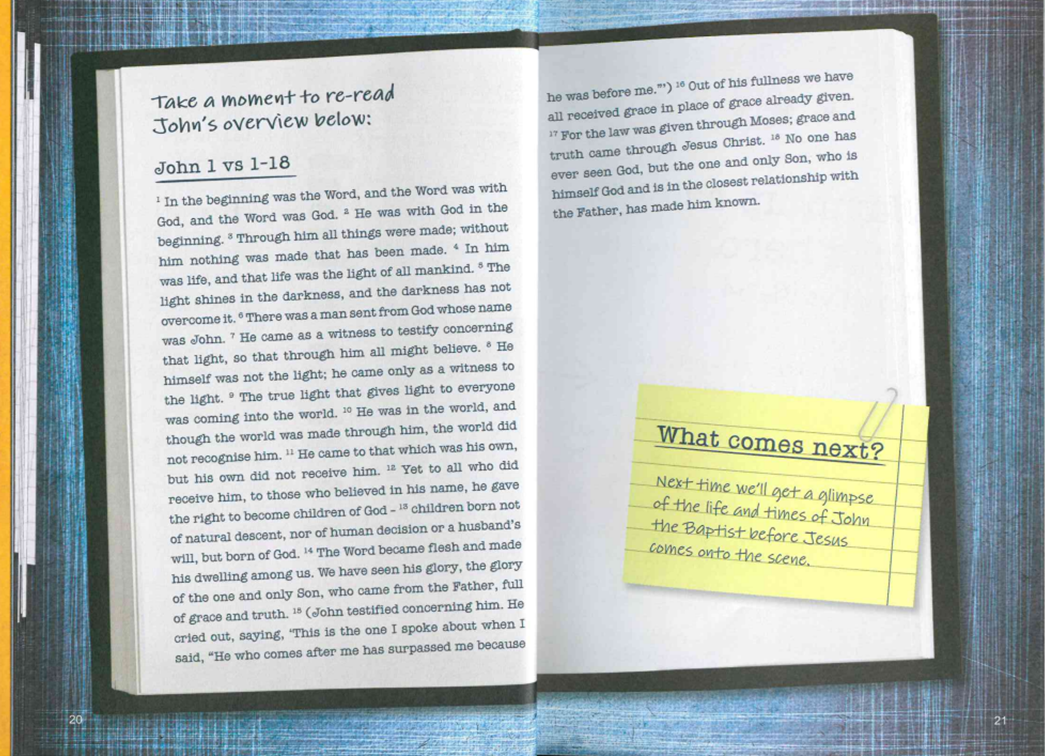
Now maybe you love the idea of being able to open the Bible with a colleague, or a friend, or a family member but you’d just like a little bit of help.The Word One to One is a great resource that’s been around a few years now. It’s a pre prepared study for meeting Jesus in John’s gospel. There are some pictures of the inside below so you can see, or feel free to grab one off the resources table any Sunday.
You’ve got the passage printed out.
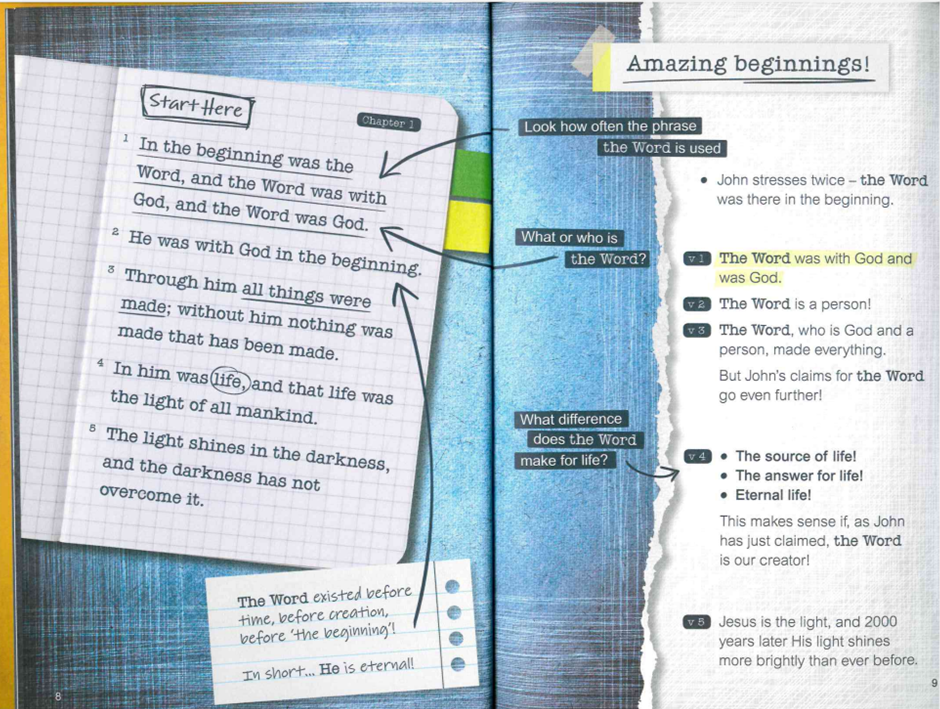
You’ve got some simple questions that nudge you in a helpful direction when you’re looking at the verses, with some simple pointers as answers there too. It’s not doing anything more than drawing your attention to the main things in the passage. And anything significant that we might not have a category for if we’re coming to it cold, it gives a little note on.
It gives you the whole passage to re-read and recap.
Hope Explored
Lastly, I just want to remind you about Hope Explored. Maybe you’re thinking, ‘This is all well and good, but my friends aren’t readers!’ Hope Explored is a resource you can use at home or out and about. It’s 3 sessions’ worth of videos looking at how Jesus gives us a certain hope. They’re from Luke’s gospel. As a church we’ve got a license for multiple groups to use it anywhere and we’ve got the videos digitally. If you wanted to watch them on a lunch break, or over a brew at home, we can send you the link and you shouldn’t have a problem. Just for a link.
[1] Colossians teaches some wonderfully deep truths pretty concisely, and gives some deep roots for us as we begin to put on Christ in our new lives, too.
[2] When I first started doing one-to-ones I went too far on this. I would turn up with my notes as two full handwritten sides of A4 based on a massive commentary … for a coffee with a 14 year old. That was stupid. But God is very kind.
[3] As described in One-to-One by David Helm, 44. It’s called the Swedish Method because it’s copied from something a student worker once saw a Bible study group use in Sweden.